
Background
I remember with delight the instant of recognition on a buddy's face as he passed me by on the side of the road. I'd just traded cars and broken down before I even got the darn thing home!
Following eye contact and a quick u-turn, within moments we'd hatched a plan to get the car back to the dealer. He'd tow me after fetching a strap from his uncle's shop.


After connecting, we were committed because we were effectively now one vehicle. Fortunately, the tow itself was uneventful despite neither of us having actually done it before.
So he took up the slack, and I lightly rode the brakes to maintain tension as needed. The only tricky bit was stopping, but we soon mastered it (and it was only a few miles back to the used car dealer).
The same thing, but different!
So in our sport, there's a facet called aerotowing and it works pretty much the same way . . . but better. This, because there's no braking involved. That, and we have more control because either the tow plane or the glider can abort the mission using a servo release to detach the line.
Anyway, as modelers we all know you don't actually 'need' a reason for wanting something. So if the aerotowing bug has bitten, the purpose of this brief article is to show you the basics.
And in the interests of full disclosure, I've basically lifted this excerpt from a Hangar 9 Carbon Cub FX-3 article. But at the same time, this article goes into significantly greater depth.
By the way, in you're interested in that ginormous 165-inch wingspan Carbon Cub model, then the above link opens in a new window so you won't lose your place within this article. Later, you may circle back to review it.
Why and what you'll need
As for why I'm sharing all this, it's just to get this fun aspect of our sport a bit more recognition. That, and because it's an exhilarating experience from both ends; either piloting the tow plane, or being towed aloft.
Equipment-wise you need two models, at least one with a functioning engine (duh). You also need a bit of hardware.
Oh, and remember, you need enough power for the model doing the towing and the model being towed, so you need a healthy engine!


These next photos are of the supplied tow-release hardware for Hangar 9's Carbon Cub FX-3. But even if you find another brand, they're all similar because it's not rocket science.
Basically, a servo retracts a pin, the loop on the line slips out, and the line is released!
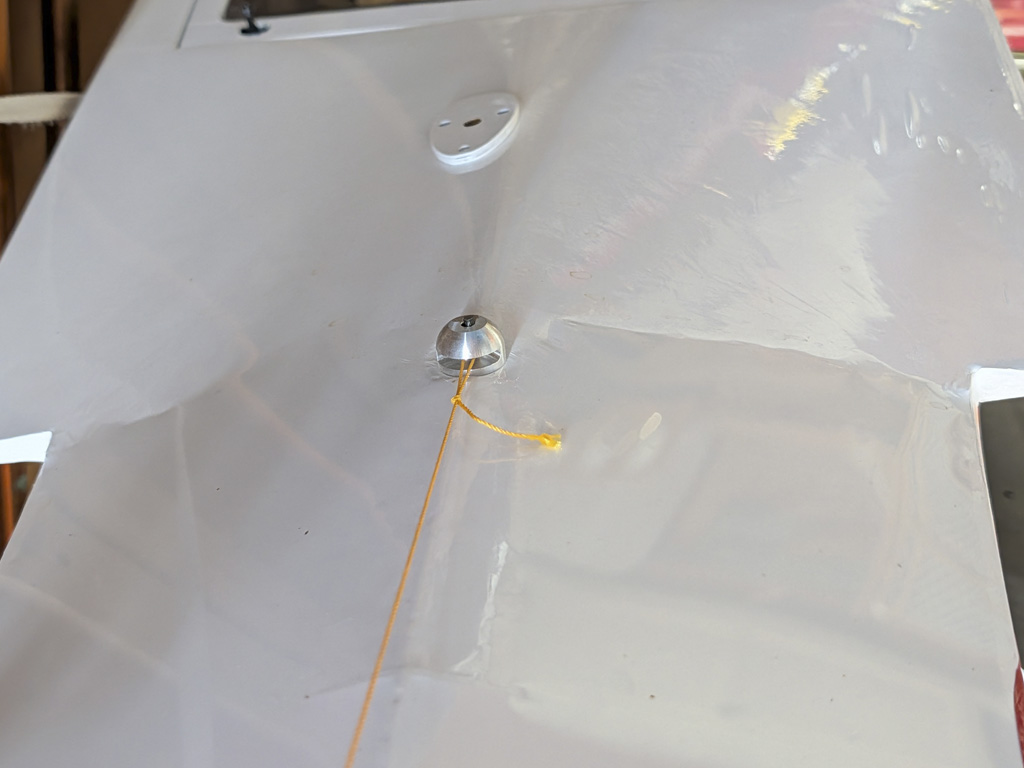
And inside the fuselage, the tow-release mechanism is simplicity itself. All you need is a standard-class servo to pull the pin, the line goes free and Bob's your uncle! And granted, while 'we' would always rather this be a ProModeler servo, the facts are pretty much anything you have laying around will likely work just fine.
Tug tow-release servo
So if you'll kindly allow me a bit leeway for a spot of propaganda, our DS90DLHV is a fine candidate for the job as the release servo in the tug. As background info, this 90-oz-in standard class servo is one of five in our DL-series of servos.
Since all five are built on the same CNC-machined alloy chassis, they're as alike as peas in a pod on the outside. And basically, they differ internally only in their gear ratio and the drive motor itself!

Anyway, this next photo shows the internal tug-release mechanism. This allows the tow plane to drop the tow-line independently of the fact the glider has a similar mechanism for release at it's end. And the reason this is handy is for if the tow pilot (that would be you) decides to abort the mission before the glider pilot acts (this, also, maybe you).
Basically, with independent release mechanisms you and the glider pilot have the control, which we didn't have back when my buddy towed my car!
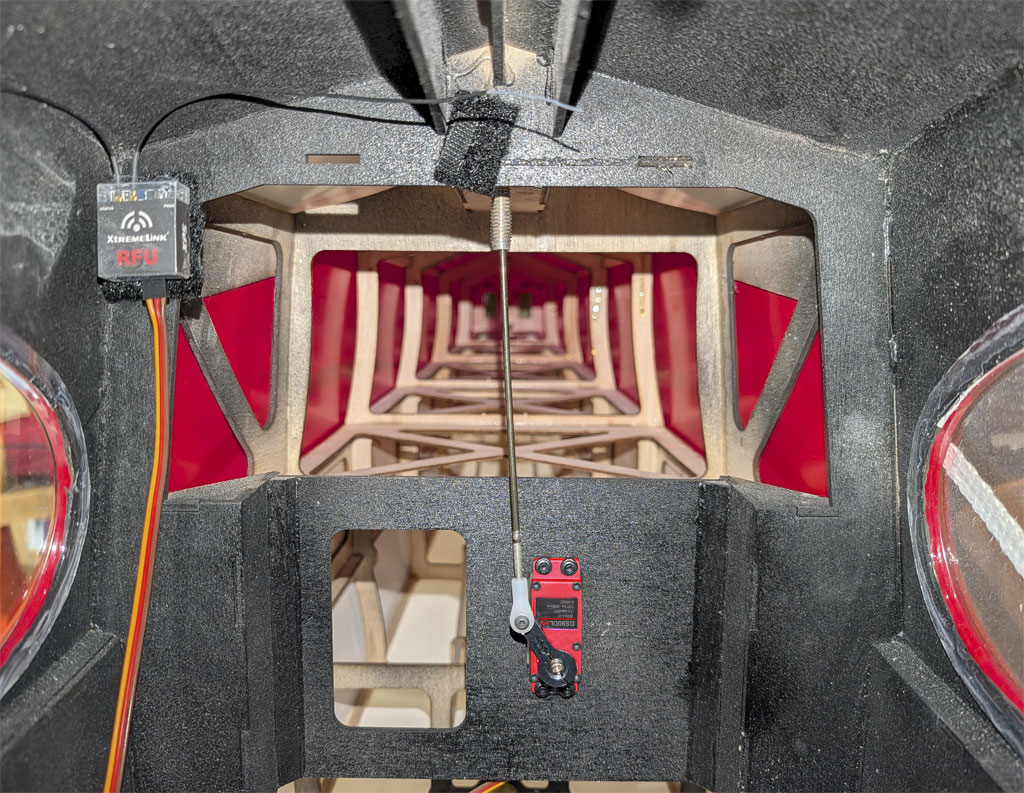
Glider tow-release servo
So for the glider, few pilots will want to install a standard class servo - much too large. For this duty we'll guide you to our DS100DLHV, similar torque but in the micro-class, instead.
Reason for this is twofold, first, because there's no engine vibration to contend with, a servo with significantly more compact gears will do yeoman duty without concern for premature gear wear. Second, the DS100DLHV is smaller and weighs a mere fraction of the similar power standard-class servo.
And by the way, this micro is actually rated at 100oz-in, which is a touch more oomph (technical engineering term) than the recommended standard class servo for the tug. Oh, and we have a 150oz-in version of this servo!

How to do it
In the real-world, this is how aerotowing works. And briefly recapping; the tow-line can be released by either the glider-pilot when the model is at altitude, or by the tug-pilot to abort the sortie.
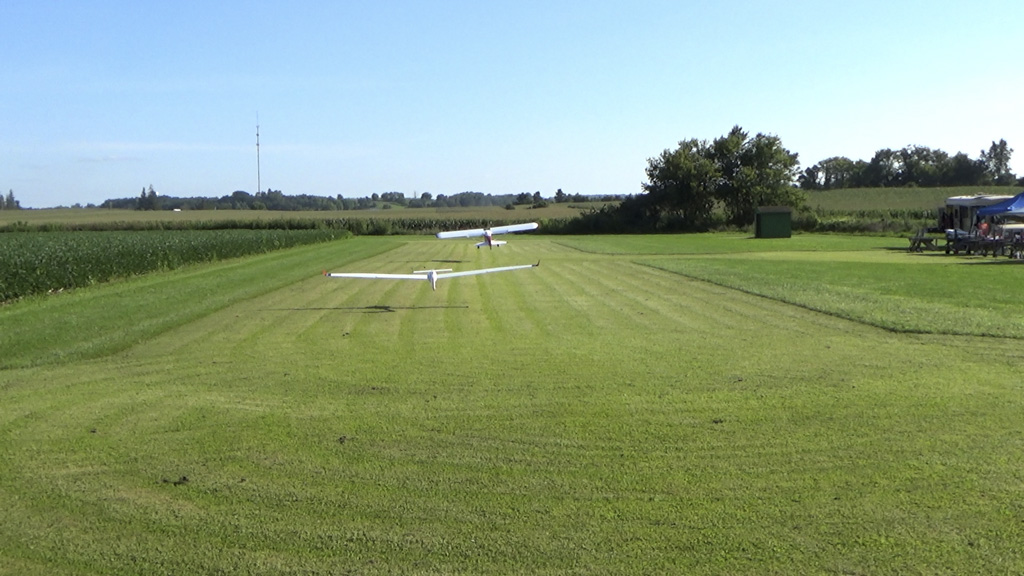
So the two models are positioned on the runway one behind the other, and in close alignment, like in this next photo. This, incidentally, is the first in a sequence of four shared with us by Dag Roppe of Mabel, MN.
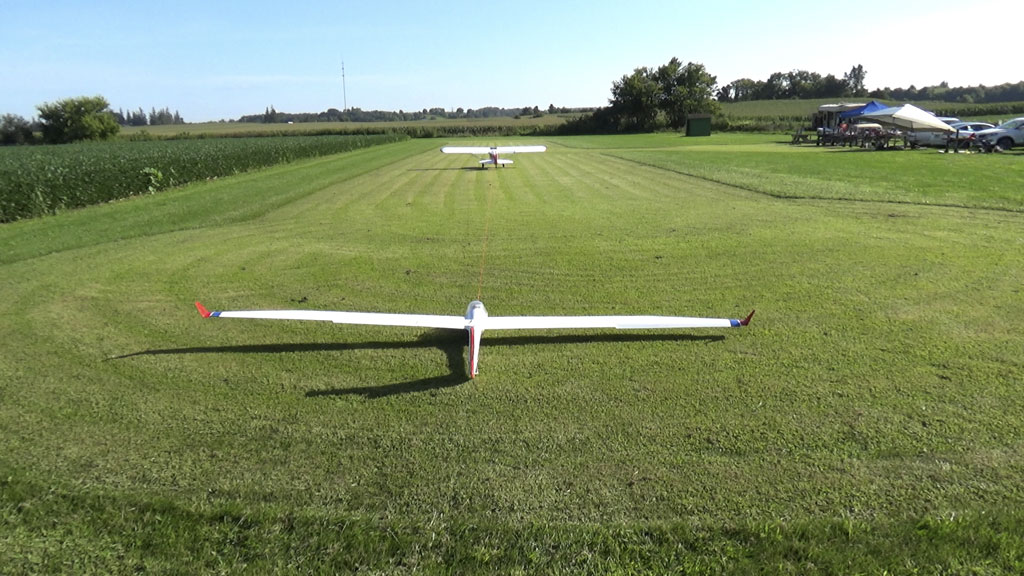
So just like when my pal and I towed my car, the first step is to take up any slack in the line to avoid harshly snatching the air frame around. Anyway, as the tug accelerates, the expectation is the glider gets airborne first.
However, as this next photo in the sequence reveals, the 165-inch wingspan Hangar 9 Carbon Cub FX-3 powered by a DLE170 is so willing to fly, it almost always gets airborne at the same time if not before the glider!
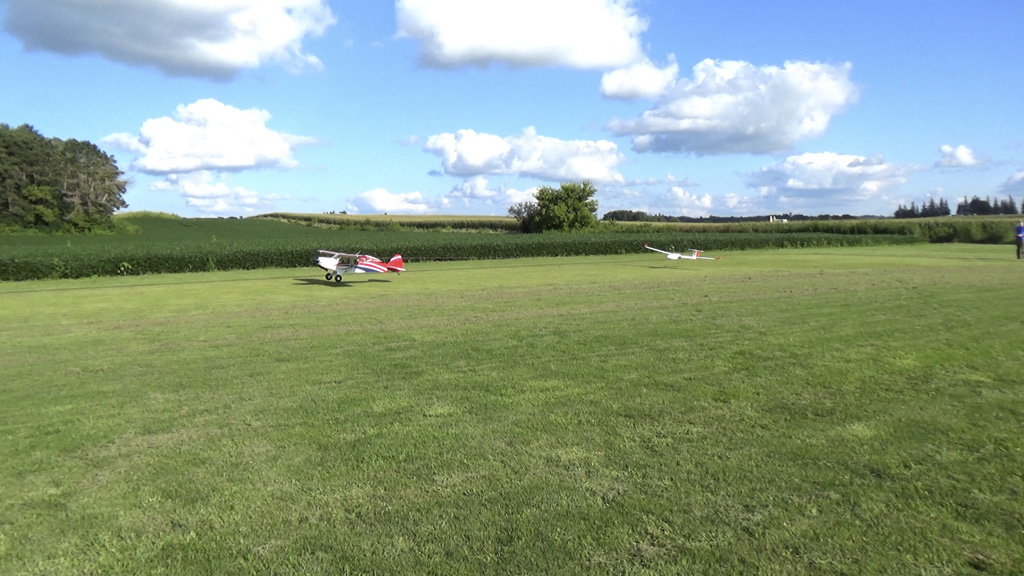
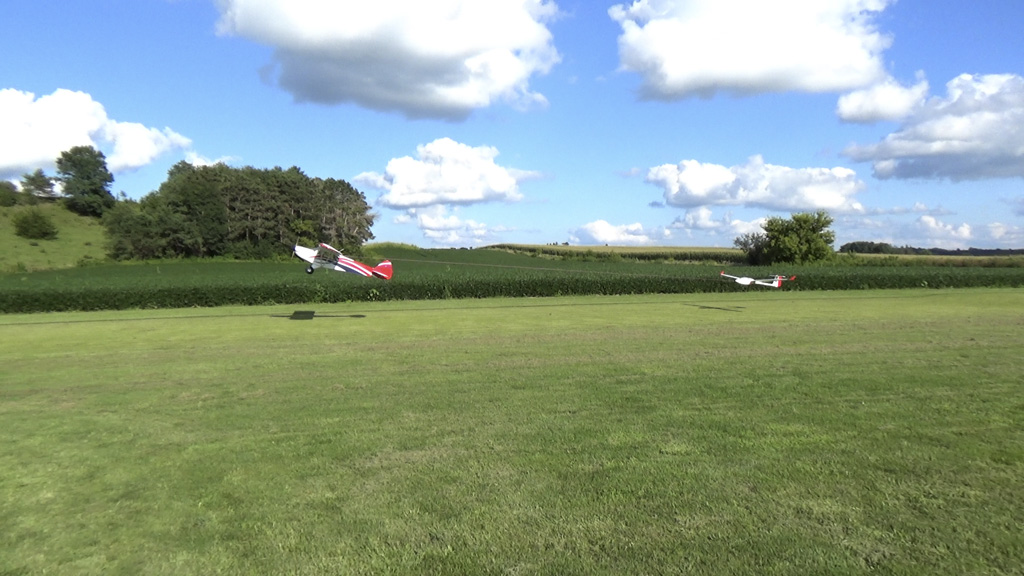
Then shortly after, the tug really begins to climb as it adopts a more positive angle of attack. Note the glider following along pretty as you please!
And don't forget to take into account in this photo, this is the DLE170 doing the pulling. Means folks flying models powered by even more powerful engines, perhaps the mighty ZDZ 210B2J boxer, or four-cylinder boxers like DA-200, or DLE222 are developing even more thrust!
And now a side view of this same launch. Eyeball the aggressive angle of attack developing in the Carbon Cub FX-3 whilst the glider effortlessly floats up in a more level attitude because the real work's being done by the tug!
Summary
You need a model with enough power to carry itself and tow the glider to altitude. And both models need to be equipped with a servo-operated tow-release mechanism.
For take off, just align one behind the other, then firewall the engine and go for launch! Suitable candidate aircraft beside the Hangar 9 Carbon Cub FX-3 include this giant PLZ Wilga by Dan Bartušek of Badan Airplane Kits -
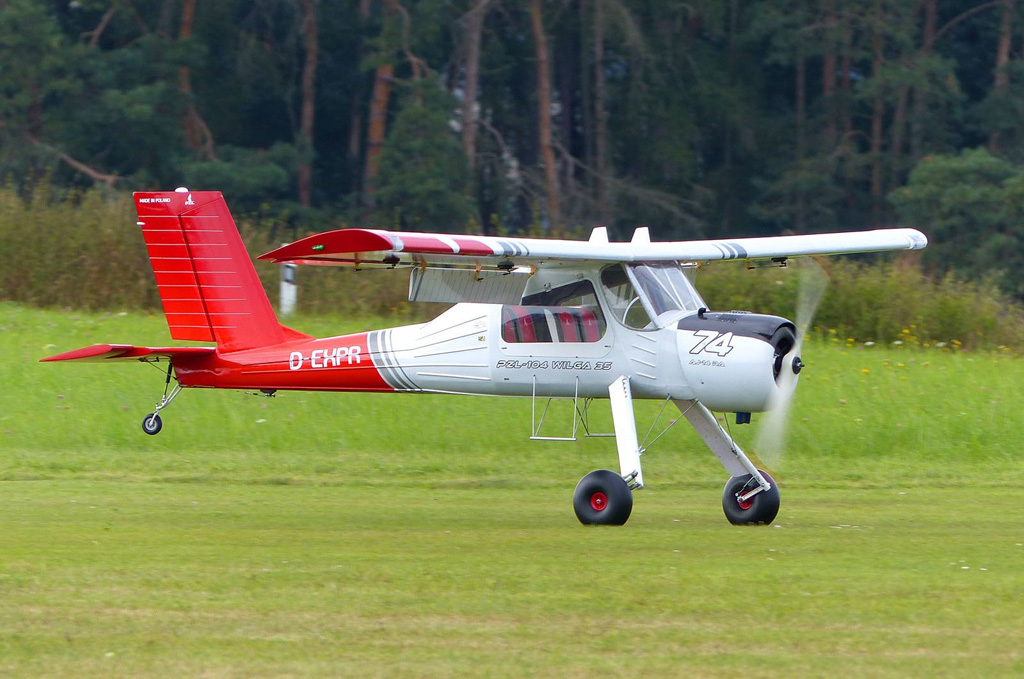
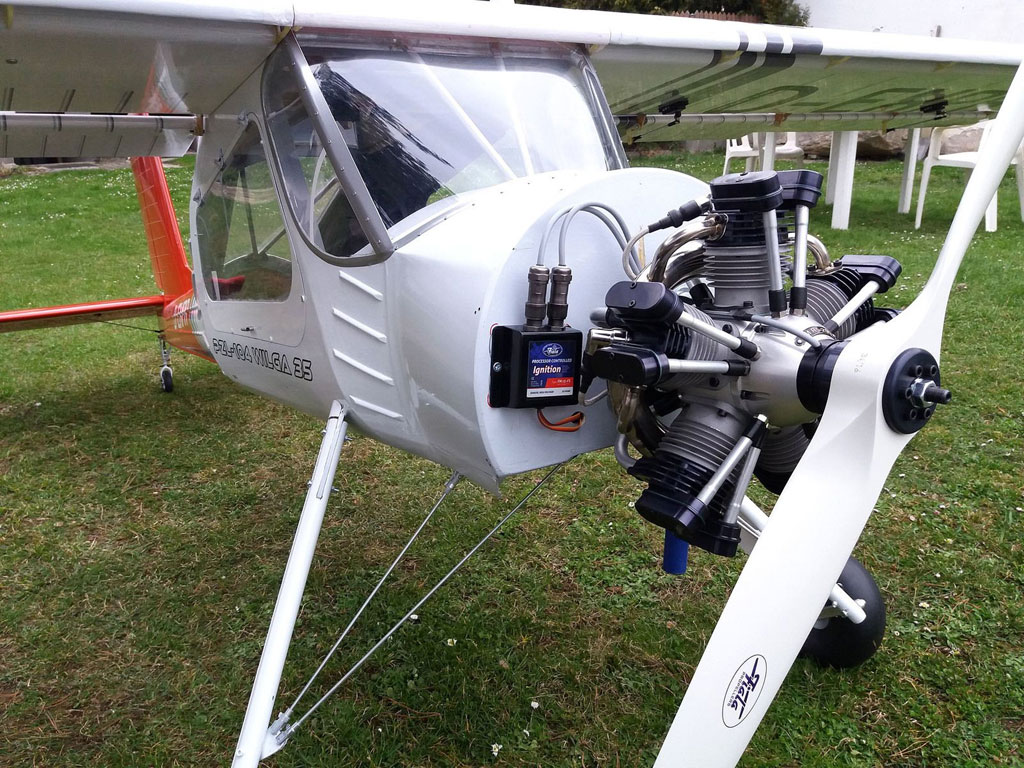
And remember, you must have a healthy engine because you're responsible for climbing with both the tug and dealing with the mass of the glider, which can be considerable with some models. In this instance, a fabulous 5-cylinder radial has more than enough beans.
Anyway, once at altitude, with both pilots standing side-by-side and coordinating the release, with just a flip of the switch, the glider cuts loose to go do his thing. Then depending on if that's the only pilot awaiting a launch the line streaming behind is unlikely to pose an issue and the tow plane continues to fly normally.
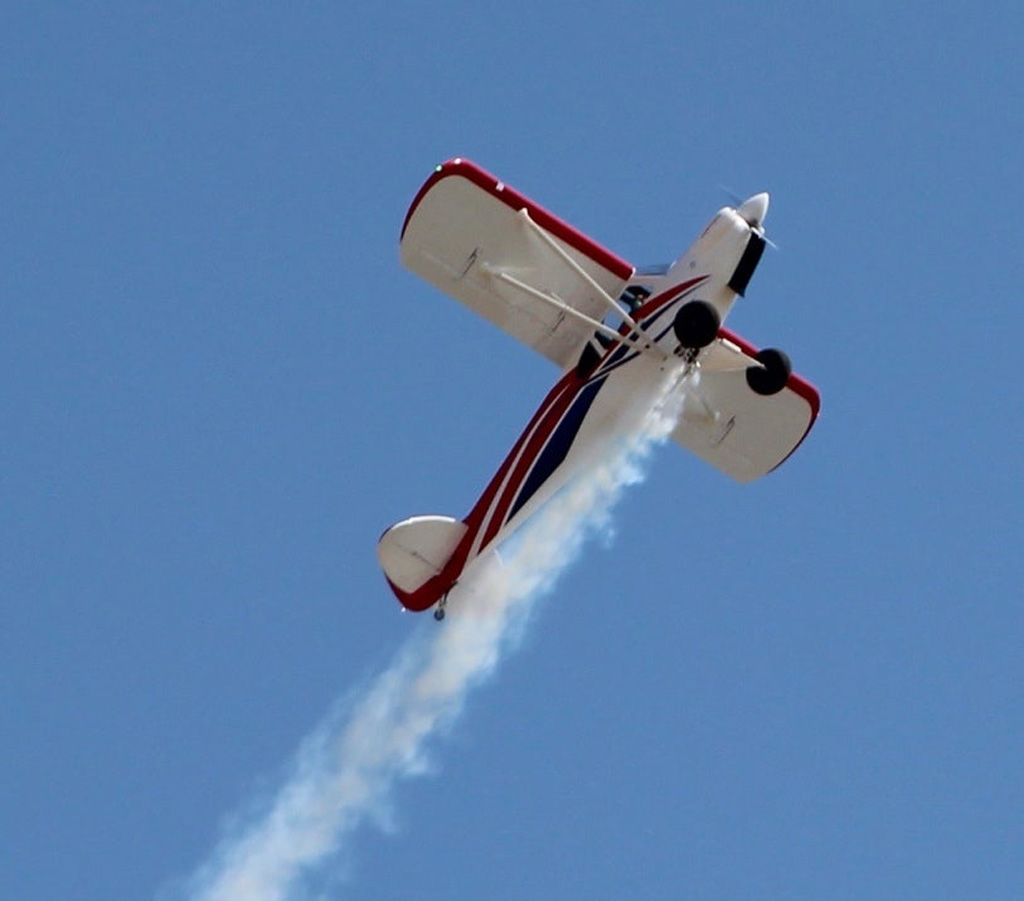
On the other hand, if there are four more pilots awaiting a tug, then the tug-pilot dives like a homesick angel and makes for a rapid return and turnaround for the next glider-guy in the queue!
Closing thoughts
Last thing, the fact is articles like these come together with the help of many other folks. Helping this time were Dag Roppe, the smiling face in the hero photo, plus Mike Feitinger, and Dan Bartušek of Badan Airplane Kits. They all generously shared both building and flying photos for this article. Our thanks!
Also, know this, as regards any errors, or omissions; they are 100% on me!



